











税金の種類
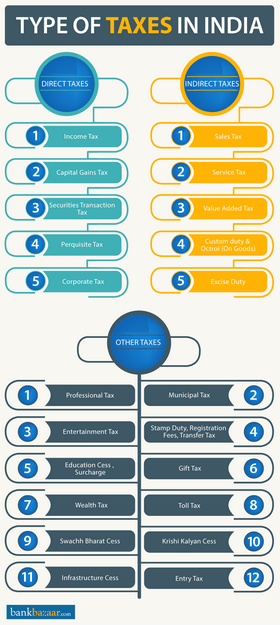
taxes are of two distinct types, direct and indirect taxes. the difference comes in the way these taxes are implemented. some are paid directly by you, such as the dreaded income tax, wealth tax, corporate tax etc. while others are indirect taxes, such as the value added tax, service tax, sales tax, etc.
1. direct taxes
2. indirect taxes
しかし、これら2つの従来の税金の他に、 その他の税金 中央政府が特定の目的を達成するために導入した政策. ‘その他の税金は、最近導入されたスワッチ・バーラト・セス税、クリシ・カリヤン・セス税、インフラ・セス税など、直接税と間接税の両方で課税されます。.
1. 直接税
直接税は、前述のように、あなたが直接支払う税金です。. これらの税金は法人または個人に直接課税され、他の誰かに転嫁することはできません。. これらの直接税を監視する機関の一つは 中央直接税委員会 (CBDT) 国税局の一部である. 直接税のさまざまな側面を規定するさまざまな法律によって、その任務を遂行する上で支援されている。.
これらの行為の一部は、:
· 所得税法:
This is also known as the IT Act of 1961 and sets the rules that govern income tax in India. The income, which this act taxes, can come from any source like a business, owning a house or property, gains received from investments and salaries, etc. This is the act that defines how much the tax benefit on a fixed deposit or a life insurance premium will be. It is also the act that decides how much of your income can you save through investments and what the slab for the income tax will be.
· 富裕税法:
富裕税法は1951年に制定され、個人、企業、ヒンドゥー統一家族の純資産に関連する課税を担当しています。. 富裕税の最も単純な計算は、純資産が30万ルピーを超える場合、30万ルピーを超えた金額の1%が税金として支払われるというものでした。. 2015年に発表された予算で廃止された. その後、年間1千万ルピー以上の収入がある個人には12%の追加料金が課せられるようになった。. 年間1億ルピー以上の収益がある企業にも適用されます。. 新しいガイドラインは、富裕税を通じて政府が徴収する金額とは対照的に、税金として政府が徴収する金額を大幅に増加させた。.
· G税法の場合:
The Gift Tax Act came into existence in 1958 and stated that if an individual received gifts, monetary or valuables, as gifts, a tax was to be to be paid on such gifts. The tax on such gifts was maintained at 30% but it was abolished in 1998. Initially if a gift was given, and it was something like property, jewellery, shares etc. it was taxable. According to the new rules gifts given by family members like brothers, sister, parents, spouse, aunts and uncles are not taxable. Even gifts given to you by the local authorities is exempt from this tax. How the tax works now is that if someone, other than the exempt entities, gifts you anything that exceeds a value of Rs. 50,000 then the entire gift amount is taxable.
· 支出税法:
これは 1987 年に制定された法律で、個人がホテルやレストランのサービスを利用する際に発生する可能性のある費用を対象としています。ジャンムー・カシミールを除くインド全土に適用されます。この法律では、特定の費用が 1 億ルピーを超えた場合に請求されると記載されています。ホテルの場合 3,000、レストランで発生した諸費用.
· 利子税法:
1974 年の利子税法は、特定の状況で得られた利子に対して支払われる税金を扱っています。この法律の前回の改正では、この法律は 2000 年 3 月以降に得られた利子には適用されないと述べられていました。.
以下に、さまざまな種類の直接税の例をいくつか示します。:
直接税の例
これらはあなたが支払う直接税の一部です
a) 所得税:
this is one of the most well-known and least understood taxes. it is the tax that is levied on your earning in a financial year. there are many facets to income tax, such as the tax slabs, taxable income, tax deducted at source (tds), reduction of taxable income, etc. the tax is applicable to both individuals and companies. for individuals, the tax that they have to pay depends on which tax bracket they fall in. this bracket or slab determines the tax to be paid based on the annual income of the assessee and ranges from no tax to 30% tax for the high income groups.
政府は、さまざまな個人グループ、つまり一般納税者、高齢者 (60 歳から 80 歳までの人々)、超高齢者 (80 歳以上の人々) に対して異なる税額を定めています。.
b) キャピタルゲイン税:
this is a tax that is payable whenever you receive a sizable amount of money. it could be from an investment or from the sale of a property. it is usually of two types, short term capital gains from investments held for less than 36 months and long term capital gains from investments held for longer than 36 months. the tax applicable for each is also very different since the tax on short term gains is calculated based in the income bracket that you fall in and the tax on long term gains is 20%. the interest thing about this tax is that the gain doesn’t always have to be in the form of money. it could also be an exchange in kind in which case the value of the exchange will be considered for taxation.
c) 有価証券取引税:
it’s no secret that if you know how to trade properly on the stock market, and trade in securities, you stand to make a substantial amount of money. this too is a source of income but it has its own tax which is known as the securities transaction tax . how this tax is levied is by adding the tax to the price of the share. this means that every time you buy or sell shares, you pay this tax. all securities traded on the indian stock exchange have this tax attached to them.
d) 特別税:
perquisites are all the perks or privileges that employers may extend to employees. these privileges may include a house provided by the company or a car for your use, given to you by the company. these perks are not just limited to big compensation like cars and houses, they can even include things like compensation for fuel or phone bills. how this tax is levied is by figuring out how that perk has been acquired by the company or used by the employee. in the case of cars, it may be so that a car provided by the company and used for both personal and official purposes is eligible for tax whereas a car used only for official purposes is not.
e) 法人税:
Corporate tax is the income tax that is paid by companies from the revenue they earn. This tax also comes with a slab of its own that decides how much tax the company has to pay. For example a domestic company, which has a revenue of less than Rs. 1 crore per annum, won’t have to pay this tax but one that has a revenue of more than Rs. 1 crore per annum will have to pay this tax. It is also referred to as a surcharge and is different for different revenue brackets. It is also different for international companies where the corporate tax may be 41.2% if the company has a revenue of less than Rs. 10 million and so on.
There are four different types of corporate tax. 彼らです:
· 最低代替税:
最低代替税(MAT)は基本的に、所得税局が企業に最低税(現在18.5%)を支払わせるための手段です。. この形式の税は、所得税法第 115 条 JA の導入によって施行されました。. ただし、インフラおよび電力セクターに関与する企業は MAT の支払いが免除されます。.
企業がMATを支払うと、一定の条件に従って、その支払いを繰り越し、その後5年間支払うべき通常の税金と相殺(調整)することができます。.
· 付加給付税:
fringe benefit tax, or fbt, was a tax which applied to almost every fringe benefit an employer provided to their employees. in this tax, a number of aspects were covered. some of them include:
i) 雇用主の旅費 (LTA)、福利厚生、宿泊費、娯楽費.
ii) 雇用主が提供する定期的な通勤費または通勤関連の費用.
iii) 認定退職基金への雇用主の拠出.
iv) 雇用主ストック・オプション・プラン (ESOP).
FBT was started under the Indian government’s stewardship from April 1, 2005. However, the tax was later scrapped in 2009 by the-then Finance Minister Pranab Mukherjee during the 2009 Union Budget session.
· 配当分配税:
Dividend Distribution Tax was introduced after the end of 2007’s Union Budget. It is basically a tax levied on companies based on the dividend they pay to their investors. This tax is applicable on the gross or net income an investor receives from their investment. Currently, the DDT rate stands at 15%.
· 銀行現金取引税:
banking cash transaction tax is yet another form of tax that has been abandoned by the indian government. this form of taxation was operation from 2005-2009 until the then fm pranab mukherjee nullified the tax. this tax suggested that every bank transaction (debit or credit) would be taxed at a rate of 0.1%.
2. 間接税:
定義上、間接税とは商品やサービスに課される税金である。. 直接税とは異なり、政府に直接支払う人に課税されるのではなく、商品に課税され、商品を販売する仲介者によって徴収される。. 間接税の最も一般的な例間接税は VAT(付加価値税)、輸入品に対する税金、売上税など. これらの税金はサービスや製品の価格に上乗せされて課税されるため、製品のコストが上昇する傾向がある。.
間接税の例:
これらは、あなたが支払う一般的な間接税の一部です.
1つの) 消費税:
As the name suggests, sales tax is a tax that is levied on the sale of a product. This product can be something that was produced in India or imported and can even cover services rendered. This tax is levied on the seller of the product who then transfers it onto the person who buys said product with the sales tax added to the price of the product. The limitation of this tax is that it can be levied only ones for a particular product, which means that if the product is sold a second time, sales tax cannot be applied to it.
Basically, all the states in the country follow their own Sales Tax Act and charge a percentage indigenous to themselves. Besides this, a few states also levy other additional charges like turnover tax, purchase tax, works transaction tax, and the like. This is also the reason why sales tax is one of the largest revenue generators for various state governments. Also, this tax is levied under both central and state legislations.
b) サービス税:
インドで販売される商品の価格に売上税が加算されるのと同様に、インドで提供されるサービスにはサービス税が加算されます。. 2015年予算案の朗読で、サービス税が12.36%から14%に引き上げられることが発表された。. これは商品には適用されず、サービスを提供する企業に適用され、サービスの提供方法に基づいて毎月または四半期に一度徴収されます。. 施設が個人のサービスプロバイダーである場合、サービス税は顧客が請求書を支払ったときにのみ支払われますが、企業の場合、サービス税は顧客が請求書を支払っているかどうかに関係なく、請求書が発行された瞬間に支払われます。.
覚えておくべき重要なことは、レストランでのサービスは料理、ウェイター、店内そのものの組み合わせであるため、何がサービス税の対象となるかを正確に特定するのは難しいということです。この点に関して、曖昧さをなくすために、レストランでのサービス税は請求総額の 40% のみに課されることが発表されました。.
- GST - 物品サービス税:
物品サービス税 (GST) は、約 25 年前に市場が開放され始めて以来、インドの間接税構造における最大の改革です。 GST は消費が行われる場所に適用されるため、消費ベースの税です。 GST は、サプライチェーンの消費の各段階で付加価値のある商品やサービスに課税されます。商品およびサービスの調達時に支払われる GST は、商品およびサービスの供給時に支払われる GST と相殺することができます。販売者は該当する GST 税率を支払いますが、税額控除メカニズムを通じて返金を請求することができます。.
c) 付加価値税:
商業税としても知られる VAT は、ゼロ評価の商品 (食品や必須医薬品など) または輸出に該当する商品には適用されません。この税は、メーカー、ディーラー、流通業者からエンドユーザーに至るまで、サプライチェーンのすべての段階で課税されます。.
the value added tax is a tax that is levied at the discretion of the state government and not all states implemented it when it was first announced. the tax is levied on various goods sold in the state and the amount of the tax is decided by the state itself. for example in gujrat the government split all the good into various categories called schedules. there are 3 schedules and each schedule has its own vat percentage. for schedule 3 the vat is 1%, for schedule 2 the vat is 5% and so on. goods that have not been classified into any category have a vat of 15%.
d) 関税とオクトロイ:
when you purchase anything that needs to be imported from another country, a charge is applied on it and that is the customs duty. it applies to all the products that come in via land, sea or air. even if you bring in products bought in another country to india, a customs duty can be levied on it. the purpose of the customs duty is to ensure that all the goods entering the country are taxed and paid for. just as customs duty ensures that goods for other countries are taxed, octroi is meant to ensure that goods crossing state borders within india are taxed appropriately. it is levied by the state government and functions in much the same way as customs duty does.
e) 消費税:
this is a tax that is levied on all the goods manufactured or produced in india. it is different from customs duty because it is applicable only on things produced in india and is also known as the central value added tax or cenvat. this tax is collected by the government from the manufacturer of the goods. it can also be collected from those entities that receive manufactured goods and employ people to transport the goods from the manufacturer to themselves.
中央政府が定めた中央物品税規則は、「物品税」を生産または製造するすべての人、またはそのような商品を倉庫に保管するすべての人が、その商品に適用される関税を支払わなければならないことを示唆しています。この規則の下では、物品税は課されません。関税の支払いが必要な商品は、生産または製造された場所を問わず、関税を支払うことなく移動することが許可されます。.