












Виды налогов
Налоги делятся на два типа: прямые и косвенные налоги. Разница заключается в том, как взимаются эти налоги. Некоторые из них выплачиваются непосредственно вами, например, подоходный налог, налог на богатство, корпоративный налог и т. д., тогда как другие являются косвенными налогами, такими как налог на добавленную стоимость, налог на услуги, налог с продаж и т. д.
1. Прямые налоги
2. Косвенные налоги
Но, кроме этих двух традиционных налогов, существуют еще Другие налоги которые были введены в действие центральным правительством для обслуживания определенной повестки дня. ‘Другие налоги взимаются как с прямых, так и с косвенных налогов, таких как недавно введенный Cess-налог Swachh Bharat, Cess-налог Криши Калян и Cess-налог на инфраструктуру, среди других.
1. Прямой налог
Прямые налоги, как указывалось ранее, — это налоги, которые платятся непосредственно вами. Эти налоги взимаются непосредственно с юридического или физического лица и не могут быть переданы кому-либо другому. Одним из органов, который игнорирует эти прямые налоги, является Центральный совет прямых налогов (CBDT) который является частью Департамента доходов. Чтобы помочь ему в выполнении своих обязанностей, он имеет поддержку различных законов, регулирующих различные аспекты прямых налогов.
Некоторые из этих актов:
· Закон о подоходном налоге:
Он также известен как Закон об информационных технологиях 1961 года и устанавливает правила, регулирующие подоходный налог в Индии. Доход, который облагается налогом в соответствии с данным законом, может поступать из любого источника, например, от бизнеса, владения домом или недвижимостью, доходов, полученных от инвестиций, заработной платы и т. д. Это закон, который определяет размер налоговой льготы по фиксированному вкладу или страховой премии по страхованию жизни. Это также закон, который решает, какую часть вашего дохода вы можете сэкономить за счет инвестиций и каков будет размер подоходного налога.
· Закон о налоге на имущество:
Закон о налоге на богатство был принят в 1951 году и отвечает за налогообложение, связанное с чистым богатством физического лица, компании или объединенной индуистской семьи. Самый простой расчет налога на богатство заключался в том, что если чистое богатство превышало рупий. 30 лакхов, затем 1% от суммы, превышающей рупий. 30 лакхов было уплачено в качестве налога. Он был отменен в бюджете, объявленном в 2015 году. С тех пор он был заменен надбавкой в размере 12% для лиц, зарабатывающих более рупий. 1 крор в год. Это также применимо к компаниям, чей доход превышает рупий. 10 крор в год. Новые руководящие принципы резко увеличили сумму, которую правительство будет собирать в виде налогов, в отличие от суммы, которую оно получит через налог на богатство.
· ГЗакон о налоге:
Закон о налоге на дарение вступил в силу в 1958 году и гласил, что если человек получил в качестве подарка подарки, денежные средства или ценные вещи, с таких подарков следует платить налог. Налог на такие подарки сохранялся на уровне 30%, но был отменен в 1998 году. Первоначально, если был подарен подарок, и это было что-то вроде имущества, драгоценностей, акций и т. д., он облагался налогом. По новым правилам подарки, подаренные членами семьи, такими как братья, сестры, родители, супруги, тети и дяди, не облагаются налогом. Даже подарки, подаренные вам местными властями, освобождаются от этого налога. Сейчас этот налог работает так: если кто-то, кроме освобожденных от налога лиц, дарит вам что-либо, стоимость которого превышает рупий. 50 000, то вся сумма подарка облагается налогом.
· Закон о налоге на расходы:
Это закон, который вступил в силу в 1987 году и касается расходов, которые вы как физическое лицо можете понести при пользовании услугами отеля или ресторана. Это применимо ко всей Индии, кроме Джамму и Кашмира. В нем говорится, что определенные расходы подлежат оплате в соответствии с этим законом, если они превышают рупий. 3000 в случае гостиницы и все расходы, понесенные в ресторане.
· Закон о процентном налоге:
Закон о налоге на проценты 1974 года регулирует налог, который подлежал уплате с процентов, полученных в определенных конкретных ситуациях. В последней поправке к закону было указано, что закон не распространяется на проценты, полученные после марта 2000 года.
Ниже приведены некоторые примеры всех различных типов прямых налогов:
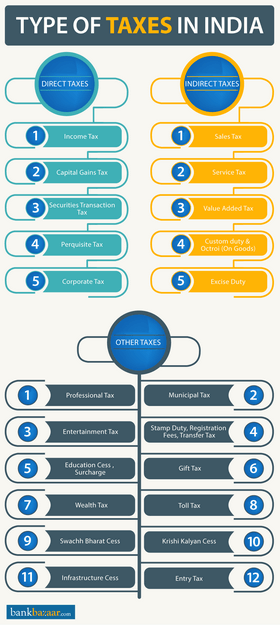
Примеры прямых налогов
Это некоторые из прямых налогов, которые вы платите
а) подоходный налог:
Это один из самых известных и наименее понятных налогов. Это налог, который взимается с вашего дохода за финансовый год. Подоходный налог имеет много аспектов, таких как налоговые плиты, налогооблагаемый доход, налог, вычитаемый у источника (TDS), уменьшение налогооблагаемого дохода и т. д. Налог применим как к физическим лицам, так и к компаниям. Для физических лиц размер налога, который они должны платить, зависит от того, к какой налоговой группе они относятся. Эта скобка или плита определяет налог, подлежащий уплате на основе годового дохода налогоплательщика, и варьируется от отсутствия налога до 30% налога для групп с высоким доходом.
Правительство установило различные налоговые ставки для различных групп лиц, а именно для обычных налогоплательщиков, пожилых людей (людей в возрасте от 60 до 80 лет) и очень пожилых людей (людей в возрасте старше 80 лет).
б) Налог на прирост капитала:
Это налог, который уплачивается всякий раз, когда вы получаете значительную сумму денег. Это может быть инвестиция или продажа недвижимости. Обычно он бывает двух типов: краткосрочный прирост капитала от инвестиций, удерживаемых менее 36 месяцев, и долгосрочный прирост капитала от инвестиций, удерживаемых более 36 месяцев. Налог, применимый к каждому из них, также сильно различается, поскольку налог на краткосрочную прибыль рассчитывается на основе группы доходов, к которой вы попадаете, а налог на долгосрочную прибыль составляет 20%. Интересная особенность этого налога заключается в том, что прибыль не всегда должна быть в денежной форме. Это также может быть обмен в натуральной форме, и в этом случае стоимость обмена будет учитываться при налогообложении.
в) Налог на операции с ценными бумагами:
Ни для кого не секрет, что если вы умеете правильно торговать на фондовом рынке и торговать ценными бумагами, вы можете заработать значительную сумму денег. Это тоже источник дохода, но у него есть свой собственный налог, известный как налог на операции с ценными бумагами . Этот налог взимается путем добавления налога к цене акции. Это означает, что каждый раз, когда вы покупаете или продаете акции, вы платите этот налог. Все ценные бумаги, торгуемые на индийской фондовой бирже, облагаются этим налогом.
г) Налог на привилегии:
Привилегии – это все льготы и привилегии, которые работодатели могут предоставлять работникам. Эти привилегии могут включать в себя дом, предоставленный компанией, или автомобиль в ваше пользование, предоставленный вам компанией. Эти льготы не ограничиваются только крупными компенсациями, такими как автомобили и дома, они могут даже включать в себя такие вещи, как компенсация за топливо или счета за телефон. Этот налог взимается путем выяснения того, как этот бонус был приобретен компанией или использован сотрудником. В случае с автомобилями может случиться так, что автомобиль, предоставленный компанией и используемый как в личных, так и в служебных целях, подлежит налогообложению, тогда как автомобиль, используемый только в служебных целях, не облагается налогом.
д) Корпоративный налог:
Корпоративный налог — это подоходный налог, который платят компании из доходов, которые они получают. Этот налог также имеет собственную таблицу, которая определяет, какую сумму налога должна платить компания. Например, отечественная компания, выручка которой составляет менее рупий. 1 крор в год, этот налог платить не придется, но тот, у кого доход превышает рупий. 1 крор в год придется платить этот налог. Его также называют надбавкой, и он различен для разных категорий доходов. Ситуация также отличается для международных компаний, где корпоративный налог может составлять 41.2%,10, если выручка компании составляет менее рупий. <n5> миллионов и так далее.
Существует четыре различных типа корпоративного налога. Они есть:
· Минимальный альтернативный налог:
Минимальный альтернативный налог, или MAT, по сути, является способом Департамента подоходного налога заставить компании платить минимальный налог, который в настоящее время составляет 18,5%. Эта форма налога была введена в действие посредством введения раздела 115JA Закона о подоходном налоге. Однако компании, работающие в инфраструктурном и энергетическом секторах, освобождены от уплаты MAT.
Как только компания уплачивает MAT, она может перенести платеж и зачесть (корректировать) в счет обычного налога, подлежащего уплате в течение последующего пятилетнего периода, при соблюдении определенных условий.
· Налог на дополнительные льготы:
Налог на дополнительные льготы, или FBT, представлял собой налог, который применялся почти к каждой дополнительной льготе, которую работодатель предоставлял своим сотрудникам. В этом налоге был охвачен ряд аспектов. Некоторые из них включают:
i) Расходы работодателя на командировки (LTA), социальное обеспечение сотрудников, проживание и развлечения.
ii) Любые регулярные расходы на поездку на работу или связанные с ней расходы, предоставляемые работодателем.
iii) Взнос работодателя в сертифицированный пенсионный фонд.
iv) Опционные планы работодателя (ESOP).
Программа fbt была запущена под руководством правительства Индии 1 апреля 2005 года. Однако впоследствии этот налог был отменен в 2009 году тогдашним министром финансов Пранабом Мукерджи во время сессии, посвященной федеральному бюджету 2009 года.
· Налог на распределение дивидендов:
Налог на распределение дивидендов был введен после окончания исполнения бюджета Союза в 2007 году. По сути, это налог, взимаемый с компаний в зависимости от дивидендов, которые они выплачивают своим инвесторам. Этот налог применяется к валовому или чистому доходу, который инвестор получает от своих инвестиций. В настоящее время ставка ДДТ составляет 15%.
· Налог на банковские операции с наличными деньгами:
Налог на банковские операции с наличными деньгами — еще одна форма налога, от которой отказалось правительство Индии. Эта форма налогообложения действовала с 2005 по 2009 год, пока тогдашний министр иностранных дел Пранаб Мукерджи не отменил налог. Этот налог предполагал, что каждая банковская операция (дебетовая или кредитная) будет облагаться налогом по ставке 0,1%.
2. Косвенный налог:
По определению, косвенные налоги – это налоги, взимаемые с товаров или услуг. Они отличаются от прямых налогов, поскольку не взимаются с лица, которое платит их непосредственно государству, а взимаются с продуктов и собираются посредником, лицом, продающим продукт. Наиболее распространенными примерами косвенного налога являются косвенные налоги НДС (налог на добавленную стоимость), налоги на импортные товары, налог с продаж и т. д. Эти налоги взимаются путем добавления их к цене услуги или продукта, что приводит к увеличению стоимости продукта.
Примеры косвенных налогов:
Это некоторые из распространенных косвенных налогов, которые вы платите.
а) Налог с продаж:
Как следует из названия, налог с продаж — это налог, взимаемый с продажи продукта. Этот продукт может быть произведен в Индии или импортирован и может даже охватывать оказанные услуги. Этот налог взимается с продавца товара, который затем передает его лицу, которое покупает указанный товар, при этом налог с продаж добавляется к цене товара. Ограничением этого налога является то, что он может взиматься только за конкретный товар, а это значит, что если товар продается вторично, к нему нельзя применить налог с продаж.
По сути, все штаты страны следуют своему собственному Закону о налоге с продаж и взимают с себя процентную ставку. Помимо этого, некоторые штаты также взимают другие дополнительные сборы, такие как налог с оборота, налог на покупку, налог на операции с работами и тому подобное. Это также причина, по которой налог с продаж является одним из крупнейших источников дохода для правительств различных штатов. Кроме того, этот налог взимается как центральным законодательством, так и законодательством штата.
б) Налоговая служба:
Как налог с продаж добавляется к цене товаров, продаваемых в Индии, так и налог на услуги добавляется к услугам, предоставляемым в Индии. При чтении бюджета 2015 года было объявлено, что налог на услуги будет повышен с 12,36% до 14%. Он применяется не к товарам, а к компаниям, предоставляющим услуги, и взимается каждый месяц или раз в квартал в зависимости от того, как предоставляются услуги. Если учреждение является индивидуальным поставщиком услуг, то налог на услуги уплачивается только после того, как клиент оплачивает счета, однако для компаний налог на услуги уплачивается в момент выставления счета, независимо от того, оплачивает ли счет клиент.
Важно помнить, что, поскольку обслуживание в ресторане представляет собой сочетание еды, официанта и самого помещения, трудно точно определить, что соответствует налогу на обслуживание. Чтобы устранить всякую неясность, в этом отношении объявлено, что налог на обслуживание в ресторанах будет взиматься только с 40% от общего счета.
- GST – налог на товары и услуги:
Налог на товары и услуги (GST) является крупнейшей реформой в структуре косвенного налогообложения Индии с тех пор, как рынок начал открываться около 25 лет назад. GST — это налог, основанный на потреблении, поскольку он применяется там, где имеет место потребление. GST взимается с товаров и услуг с добавленной стоимостью на каждом этапе потребления в цепочке поставок. GST, подлежащий уплате при приобретении товаров и услуг, может быть зачтен в счет GST, подлежащего уплате при поставке товаров и услуг. Продавец будет платить применимую ставку GST, но может потребовать его обратно через механизм налоговых льгот.
с) Налог на добавленную стоимость:
НДС, также известный как коммерческий налог, не применяется к товарам с нулевой ставкой (например,. продукты питания и основные лекарства) или те, которые подпадают под экспорт. Этот налог взимается на всех этапах цепочки поставок, начиная от производителей, дилеров и дистрибьюторов до конечного потребителя.
Налог на добавленную стоимость — это налог, который взимается по усмотрению правительства штата, и не все штаты ввели его, когда он был впервые объявлен. Налог взимается с различных товаров, продаваемых в штате, а размер налога определяется самим государством. Например, в Гуджрате правительство разделило все хорошее на различные категории, называемые графиками. Существует 3 графика, и каждый график имеет свой процент НДС. Для Графика 3 НДС составляет 1%, для Графика 2 НДС составляет 5% и так далее. Товары, не отнесенные ни к одной категории, облагаются НДС в размере 15%.
д) Таможенная пошлина и Octroi:
Когда вы покупаете что-либо, что необходимо импортировать из другой страны, к этому взимается сбор, то есть таможенная пошлина. Это относится ко всем продуктам, которые доставляются по суше, морю или воздуху. Даже если вы ввозите в Индию продукцию, купленную в другой стране, с нее может взиматься таможенная пошлина. Целью таможенной пошлины является обеспечение того, чтобы все товары, ввозимые в страну, облагались налогом и оплачивались. Точно так же, как таможенная пошлина гарантирует, что товары для других стран будут облагаться налогом, Octroi призван гарантировать, что товары, пересекающие государственные границы внутри Индии, облагаются налогом соответствующим образом. Он взимается правительством штата и действует почти так же, как таможенная пошлина.
е) Акцизный сбор:
Это налог, который взимается со всех товаров, производимых или производимых в Индии. Он отличается от таможенной пошлины, поскольку применяется только к товарам, произведенным в Индии, и также известен как центральный налог на добавленную стоимость или CENVAT. Этот налог взимается государством с производителя товаров. Он также может взиматься с тех субъектов, которые получают промышленные товары и нанимают людей для перевозки товаров от производителя к себе.
Правила центрального акцизного сбора, установленные центральным правительством, предусматривают, что каждое лицо, которое производит или производит какие-либо «акцизные товары» или хранит такие товары на складе, должно будет платить пошлину, применимую к таким товарам в. Согласно этому правилу, никакие подакцизные товары, по которым взимается какая-либо пошлина, не могут быть перемещены без уплаты пошлины из любого места, где они производятся или изготавливаются.