












Tipos de impuestos
Los impuestos son de dos tipos distintos: impuestos directos e indirectos. La diferencia está en la forma en que se implementan estos impuestos. Algunos los pagas directamente tú, como el temido impuesto sobre la renta, el impuesto al patrimonio, el impuesto corporativo, etc., mientras que otros son impuestos indirectos, como el impuesto al valor agregado, el impuesto a los servicios, el impuesto a las ventas, etc.
1. Impuestos directos
2. Impuestos indirectos
Pero, además de estos dos impuestos convencionales, también hay otros impuestos que han sido puestos en vigor por el Gobierno central para servir a una agenda particular. Se aplican “otros impuestos” tanto a los impuestos directos como a los indirectos, como el recientemente introducido impuesto Swachh Bharat, el impuesto Krishi Kalyan y el impuesto de infraestructura, entre otros.
1. Impuesto directo
Los impuestos directos, como se indicó anteriormente, son los impuestos que usted paga directamente. Estos impuestos se aplican directamente a una entidad o persona física y no pueden transferirse a ninguna otra persona. Uno de los organismos que supervisa estos impuestos directos es la Junta Central de Impuestos Directos (CBDT), que forma parte del Departamento de Ingresos. Cuenta, para ayudarle en sus funciones, con el apoyo de diversas leyes que regulan diversos aspectos de los impuestos directos.
Algunos de estos actos son:
· Ley del Impuesto sobre la Renta:
Esta ley también se conoce como la Ley de TI de 1961 y establece las reglas que rigen el impuesto sobre la renta en la India. Los ingresos que grava esta ley pueden provenir de cualquier fuente, como un negocio, la posesión de una casa o propiedad, ganancias recibidas de inversiones y salarios, etc. Esta es la ley que define cuánto será el beneficio fiscal sobre un depósito fijo o una prima de seguro de vida. También es la ley que decide cuánto de sus ingresos puede ahorrar a través de inversiones y cuál será el límite para el impuesto sobre la renta.
· Ley del Impuesto sobre el Patrimonio:
La Ley del Impuesto sobre el Patrimonio se promulgó en 1951 y es responsable de la tributación relacionada con el patrimonio neto de un individuo, una empresa o una Familia Unificada Hindú. El cálculo más simple del impuesto al patrimonio era que si el patrimonio neto superaba los 30 lakhs de rupias, entonces se debía pagar como impuesto el 1% del monto que excedía los 30 lakhs de rupias. Fue abolido en el presupuesto anunciado en 2015. Desde entonces ha sido reemplazado por un recargo del 12% para las personas que ganan más de 1 crore de rupias por año. También se aplica a empresas que tienen unos ingresos superiores a 10 millones de rupias al año. Las nuevas directrices aumentaron drásticamente la cantidad que el gobierno recaudaría en impuestos en comparación con la cantidad que recaudaría a través del impuesto a la riqueza.
· GLey del Impuesto ift:
La Ley del Impuesto sobre Donaciones entró en vigencia en 1958 y estableció que si una persona recibía obsequios, monetarios o de valor, como obsequios, debía pagar un impuesto sobre dichos obsequios. El impuesto sobre este tipo de donaciones se mantuvo en el 30%, pero fue abolido en 1998. Inicialmente, si se hacía un regalo, y era algo como una propiedad, joyas, acciones, etc., estaba sujeto a impuestos. Según las nuevas reglas, los obsequios dados por familiares como hermanos, hermanas, padres, cónyuge, tías y tíos no están sujetos a impuestos. Incluso los regalos que le regalen las autoridades locales están exentos de este impuesto. La forma en que funcionan los impuestos ahora es que si alguien, que no sea una entidad exenta, le regala algo que exceda un valor de Rs. 50.000, entonces el monto total del regalo está sujeto a impuestos.
· Ley del Impuesto sobre los Gastos:
Se trata de una ley que entró en vigor en 1987 y que se ocupa de los gastos que usted, como particular, puede tener al utilizar los servicios de un hotel o un restaurante.. Se aplica en toda la India excepto en Jammu y Cachemira.. Establece que determinados gastos son imputables en virtud de esta ley si superan las 3.000 rupias en el caso de un hotel y todos los gastos incurridos en un restaurante.
· Ley del Impuesto sobre Intereses:
La Ley del Impuesto sobre Intereses de 1974 trata del impuesto que se pagaba sobre los intereses obtenidos en ciertas situaciones específicas. En la última modificación de la ley se afirmó que la ley no se aplica a los intereses devengados después de marzo de 2000.
A continuación se presentan algunos ejemplos de todos los diferentes tipos de impuestos directos:
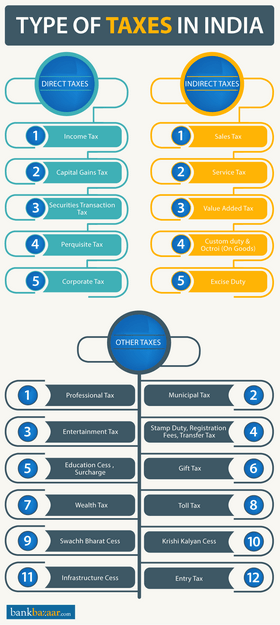
Ejemplos de impuestos directos
Estos son algunos de los impuestos directos que usted paga
a) Impuesto sobre la Renta:
Este es uno de los impuestos más conocidos y menos comprendidos. Es el impuesto que se aplica sobre sus ganancias en un año fiscal. El impuesto sobre la renta tiene muchas facetas, como las franjas impositivas, la renta imponible, el impuesto deducido en la fuente (TDS), la reducción de la renta imponible, etc. El impuesto se aplica tanto a personas físicas como a empresas. Para las personas, el impuesto que deben pagar depende del tramo impositivo en el que se encuentren. Este tramo o banda determina el impuesto a pagar en función del ingreso anual del contribuyente y varía desde ningún impuesto hasta un impuesto del 30% para los grupos de altos ingresos.
El gobierno ha fijado diferentes tramos de impuestos para varios grupos de personas, a saber, los contribuyentes generales, los ciudadanos de la tercera edad (personas entre 60 y 80 años) y los ciudadanos de la tercera edad (personas mayores de 80 años).
b) Impuesto sobre las ganancias de capital:
Se trata de un impuesto que hay que pagar cada vez que se recibe una cantidad importante de dinero.. Puede ser de una inversión o de la venta de una propiedad. Suele ser de dos tipos: las plusvalías a corto plazo procedentes de inversiones mantenidas durante menos de 36 meses y las plusvalías a largo plazo procedentes de inversiones mantenidas durante más de 36 meses.. La fiscalidad aplicable a cada una de ellas también es muy diferente, ya que el impuesto sobre las ganancias a corto plazo se calcula en función del tramo de renta en el que te encuentres y el impuesto sobre las ganancias a largo plazo es del 20%.. Lo interesante de este impuesto es que la ganancia no siempre tiene que ser en forma de dinero. También puede tratarse de un intercambio en especie, en cuyo caso el valor del intercambio se tendrá en cuenta a efectos fiscales.
c) Impuesto sobre las Transacciones de Valores:
No es ningún secreto que si sabe cómo operar adecuadamente en el mercado de valores y negociar con valores, puede ganar una cantidad sustancial de dinero. Esto también es una fuente de ingresos, pero tiene su propio impuesto que se conoce como Impuesto a las Transacciones de Valores . La forma de recaudar este impuesto es agregándolo al precio de la acción. Esto significa que cada vez que compras o vendes acciones, pagas este impuesto. Todos los valores negociados en la Bolsa de Valores de la India tienen este impuesto asociado.
d) Impuesto sobre beneficios:
Los requisitos son todos los beneficios o privilegios que los empleadores pueden extender a los empleados. Estos privilegios pueden incluir una casa proporcionada por la empresa o un automóvil para su uso, proporcionado por la empresa. Estos beneficios no se limitan sólo a grandes compensaciones como automóviles y casas, sino que también pueden incluir cosas como compensación por facturas de combustible o teléfono. La forma de recaudar este impuesto es determinando cómo la empresa ha adquirido ese beneficio o lo ha utilizado el empleado. En el caso de los automóviles, puede ser que un automóvil proporcionado por la empresa y utilizado tanto para fines personales como oficiales sea elegible para impuestos, mientras que un automóvil utilizado solo para fines oficiales no lo sea.
e) Impuesto de Sociedades:
El impuesto de sociedades es el impuesto sobre la renta que pagan las empresas sobre los ingresos que obtienen. Este impuesto también viene con un límite propio que decide cuánto impuesto debe pagar la empresa. Por ejemplo, una empresa nacional, que tiene un ingreso de menos de Rs. 1 crore por año, no tendrá que pagar este impuesto, pero una que tenga un ingreso de más de Rs. 1 crore por año tendrá que pagar este impuesto. También se le conoce como recargo y es diferente para los distintos tramos de ingresos. También es diferente para las empresas internacionales, donde el impuesto corporativo puede ser del 41.2%,10 si la empresa tiene unos ingresos inferiores a <n5> millones de rupias, etc.
Existen cuatro tipos diferentes de impuesto de sociedades. Ellos son:
· Impuesto Mínimo Alternativo:
El Impuesto Mínimo Alternativo, o MAT, es básicamente una forma que tiene el Departamento de Impuestos sobre la Renta para obligar a las empresas a pagar un impuesto mínimo, que actualmente se sitúa en el 18,5%. Esta forma de impuesto entró en vigor mediante la introducción de la Sección 115JA de la Ley del Impuesto sobre la Renta. Sin embargo, las empresas involucradas en los sectores de infraestructura y energía están exentas del pago del MAT.
Una vez que una empresa paga el MAT, puede trasladar el pago al ejercicio siguiente y compensarlo (ajustarlo) con el impuesto regular a pagar durante el período de cinco años posterior, sujeto a ciertas condiciones.
· Impuesto sobre beneficios complementarios:
El impuesto sobre beneficios complementarios, o FBT, era un impuesto que se aplicaba a casi todos los beneficios complementarios que un empleador proporcionaba a sus empleados. En este impuesto se cubrieron diversos aspectos. Algunos de ellos incluyen:
i) Gastos del empleador en viajes (LTA), bienestar del empleado, alojamiento y entretenimiento.
ii) Cualquier gasto de viaje regular o relacionado con el viaje proporcionado por un empleador.
iii) Contribución del empleador a un fondo de jubilación certificado.
iv) Planes de opciones sobre acciones del empleador (ESOP).
El programa FBT se inició bajo la dirección del gobierno indio el 1 de abril de 2005. Sin embargo, el impuesto fue posteriormente derogado en 2009 por el entonces ministro de finanzas, Pranab Mukherjee, durante la sesión del presupuesto de la Unión de 2009.
· Impuesto sobre la distribución de dividendos:
El impuesto a la distribución de dividendos se introdujo después del final del Presupuesto de la Unión de 2007. Se trata básicamente de un impuesto que se aplica a las empresas en función del dividendo que pagan a sus inversores. Este impuesto se aplica sobre el ingreso bruto o neto que un inversionista recibe de su inversión. Actualmente, la tasa de DDT se sitúa en el 15%.
· Impuesto sobre las transacciones bancarias en efectivo:
El impuesto a las transacciones bancarias en efectivo es otra forma de impuesto que ha sido abandonada por el gobierno indio. Esta forma de tributación estuvo vigente desde 2005 a 2009 hasta que el entonces Ministro de Hacienda, Pranab Mukherjee, anuló el impuesto. Este impuesto sugería que toda transacción bancaria (débito o crédito) estaría gravada a una tasa del 0,1%.
2. Impuesto indirecto:
Por definición, los impuestos indirectos son aquellos impuestos que se aplican sobre bienes o servicios. Se diferencian de los impuestos directos porque no se imponen a una persona que los paga directamente al gobierno, sino que se imponen a los productos y son recaudados por un intermediario, la persona que vende el producto. Los ejemplos más comunes de impuestos indirectos Los impuestos indirectos pueden ser el IVA (Impuesto al Valor Agregado), los Impuestos sobre Bienes Importados, el Impuesto sobre Ventas, etc. Estos impuestos se recaudan añadiéndolos al precio del servicio o producto, lo que tiende a aumentar el coste del producto.
Ejemplos de impuestos indirectos:
Estos son algunos de los impuestos indirectos comunes que usted paga.
a) Impuesto sobre las ventas:
Como sugiere el nombre, el impuesto sobre las ventas es un impuesto que se aplica sobre la venta de un producto. Este producto puede ser algo que se produjo en la India o se importó e incluso puede cubrir servicios prestados. Este impuesto se aplica al vendedor del producto, quien luego lo transfiere a la persona que compra dicho producto, y el impuesto sobre las ventas se agrega al precio del producto. La limitación de este impuesto es que sólo se puede aplicar una vez a un producto en particular, lo que significa que si el producto se vende una segunda vez, no se le puede aplicar el impuesto a las ventas.
Básicamente, todos los estados del país siguen su propia Ley de Impuesto sobre las Ventas y cobran un porcentaje propio. Además de esto, algunos estados también imponen otros cargos adicionales como el impuesto sobre el volumen de negocios, el impuesto sobre las compras, el impuesto sobre las transacciones de obras y similares. Esta es también la razón por la que el impuesto sobre las ventas es uno de los mayores generadores de ingresos para varios gobiernos estatales. Además, este impuesto se aplica tanto a nivel central como estatal.
b) Impuesto sobre servicios:
De la misma manera que el impuesto a las ventas se agrega al precio de los bienes vendidos en India, también se agrega el impuesto a los servicios prestados en India. En la lectura del presupuesto 2015, se anunció que el impuesto a los servicios se elevará del 12.36%,14% al <n4> No se aplica a bienes sino a empresas que prestan servicios y se recauda mensualmente o trimestralmente en función de cómo se presten los servicios. Si el establecimiento es un proveedor de servicios individual, entonces el impuesto al servicio se paga solo una vez que el cliente paga las facturas; sin embargo, para las empresas, el impuesto al servicio se paga en el momento en que se emite la factura, independientemente de si el cliente paga la factura.
Una cosa importante a recordar es que, dado que el servicio en un restaurante es una combinación de la comida, el camarero y el local en sí, es difícil determinar con exactitud qué califica para el impuesto al servicio. Para eliminar cualquier ambigüedad al respecto, se ha anunciado que el impuesto al servicio en los restaurantes se aplicará solo sobre el 40% de la factura total.
- GST - Impuesto sobre bienes y servicios:
El impuesto sobre bienes y servicios (GST) es la mayor reforma en la estructura tributaria indirecta de la India desde que el mercado comenzó a abrirse hace unos 25 años. El GST es un impuesto basado en el consumo, ya que se aplica donde se produce el consumo. El GST se aplica a bienes y servicios de valor añadido en cada etapa del consumo en la cadena de suministro. El GST pagadero por la adquisición de bienes y servicios se puede compensar con el GST pagadero por el suministro de bienes y servicios; el comerciante pagará la tasa de GST aplicable, pero puede reclamarla a través del mecanismo de crédito fiscal.
do) Impuesto sobre el valor añadido:
El IVA, también conocido como impuesto comercial, no se aplica a los productos con tipo cero (por ejemplo,. alimentos y medicamentos esenciales) o los que entran en el rubro de exportaciones. Este impuesto se aplica en todas las etapas de la cadena de suministro, desde los fabricantes, comerciantes y distribuidores hasta el usuario final.
El impuesto al valor agregado es un impuesto que se aplica a discreción del gobierno estatal y no todos los estados lo implementaron cuando se anunció por primera vez. El impuesto se aplica a diversos bienes vendidos en el estado y el monto del mismo lo decide el propio estado. Por ejemplo, en Gujrat, el gobierno dividió todos los bienes en varias categorías llamadas listas. Hay 3 horarios y cada horario tiene su propio porcentaje de IVA. Para el Anexo 3 el IVA es del 1%, para el Anexo 2 el IVA es del 5% y así sucesivamente. Las mercancías que no hayan sido clasificadas en ninguna categoría tienen un IVA del 15%.
d) Derechos de aduana y octroi:
Cuando compras cualquier cosa que necesite ser importada de otro país, se le aplica un cargo y ese es el derecho de aduana. Se aplica a todos los productos que ingresan vía terrestre, marítima o aérea. Incluso si trae a la India productos comprados en otro país, se le puede cobrar un arancel aduanero. El propósito del derecho de aduana es garantizar que todos los bienes que ingresan al país estén gravados y pagados. Así como los derechos de aduana garantizan que las mercancías destinadas a otros países estén gravadas, el octroi tiene por objeto garantizar que las mercancías que cruzan las fronteras estatales dentro de la India estén gravadas adecuadamente. Es recaudado por el gobierno estatal y funciona de manera muy similar a los derechos de aduana.
e) Impuestos especiales:
Se trata de un impuesto que se aplica a todos los bienes fabricados o producidos en la India. Es diferente de los derechos de aduana porque se aplica únicamente a los productos producidos en la India y también se conoce como Impuesto al Valor Agregado Central o CENVAT. Este impuesto lo recauda el gobierno al fabricante de los bienes. También se puede recaudar de aquellas entidades que reciben bienes manufacturados y emplean personas para transportar los bienes desde el fabricante hasta ellas mismas.
La Norma Central de Impuestos Especiales establecida por el gobierno central sugiere que toda persona que produzca o fabrique cualquier "bien sujeto a impuestos especiales", o que almacene dichos bienes en un almacén, tendrá que pagar el impuesto aplicable a dichos bienes en. En virtud de esta regla, no se permitirá que ningún bien sujeto a impuestos especiales, sobre el cual se paguen derechos, circule sin el pago de derechos desde ningún lugar donde se produzca o fabrique.