











세금의 종류
세금에는 직접세와 간접세의 두 가지 유형이 있습니다. 차이점은 이러한 세금이 시행되는 방식에 있습니다. 무서운 소득세, 부유세, 법인세 등 일부는 귀하가 직접 납부하는 반면, 일부는 부가가치세, 서비스세, 판매세 등과 같은 간접세입니다.
1. 직접세
2. 간접세
그러나 이 두 가지 기존 세금 외에도 다음과 같은 세금이 있습니다 기타 세금 특정 의제를 수행하기 위해 중앙 정부가 시행하는 것. ‘기타 세금은 최근 도입된 Swachh Bharat Cess 세금, Krishi Kalyan Cess 세금, 인프라 Cess 세금 등 직접세와 간접세 모두에 부과됩니다.
1. 직접세
직접세는 앞에서 설명한 것처럼 귀하가 직접 납부하는 세금입니다. 이 세금은 법인이나 개인에게 직접 부과되며 다른 사람에게 양도할 수 없습니다. 이러한 직접세를 간과하는 기관 중 하나는 중앙직접세위원회(CBDT) 이는 세무부의 일부입니다. 직무 수행을 돕기 위해 직접세의 다양한 측면을 규율하는 다양한 법안을 지원합니다.
이러한 행위 중 일부는 다음과 같습니다:
· 소득세법:
이는 1961년 IT법이라고도 알려져 있으며 인도의 소득세에 적용되는 규칙을 설정합니다. 이 법이 과세하는 소득은 사업, 주택이나 부동산 소유, 투자 및 급여에서 얻은 이익 등 모든 출처에서 나올 수 있습니다. 정기예금이나 생명보험료에 대한 세제혜택을 어느 정도까지 정하는 법입니다. 또한, 투자를 통해 소득 중 얼마만큼을 절약할 수 있는지, 소득세를 얼마나 낼지 결정하는 행위이기도 합니다.
· 부유세법:
부유세법은 1951년에 제정되었으며 개인, 회사 또는 힌두교 가족의 순자산과 관련된 과세를 담당합니다. 부유세의 가장 간단한 계산은 순자산이 Rs를 초과하는 경우였습니다. 30 lakhs, Rs를 초과하는 금액의 1%. 30만원을 세금으로 납부했어요. 2015년에 발표된 예산에서 폐지되었습니다. 이후 개인 소득이 Rs 이상인 경우 12%의 추가 요금으로 대체되었습니다. 연간 1억. 매출액이 5000만원 이상인 기업에도 적용된다. 연간 10억. 새로운 지침은 부유세를 통해 징수하는 금액이 아닌 정부가 세금으로 징수하는 금액을 대폭 늘렸습니다.
· Gift 세법:
1958년에 제정된 증여세법은 개인이 금전이나 귀중품 등을 선물로 받은 경우 해당 선물에 대해 세금을 납부해야 한다고 규정했습니다. 증여세는 30%로 유지되었으나 1998년 폐지되었다. 처음에 선물이 주어졌고 그것이 재산, 보석, 주식 등과 같은 것인 경우 과세 대상이었습니다. 새로운 규정에 따르면 형제, 자매, 부모, 배우자, 고모, 삼촌 등 가족 구성원이 제공한 선물은 과세 대상이 아닙니다. 지방 당국이 귀하에게 제공한 선물도 이 세금에서 면제됩니다. 현재 세금이 적용되는 방식은 면제 법인이 아닌 누군가가 귀하에게 Rs의 가치를 초과하는 물품을 선물하는 경우입니다. 50,000이면 전체 선물 금액에 과세됩니다.
· 지출세법:
이는 1987년에 제정된 법률로 개인이 호텔이나 레스토랑의 서비스를 이용하면서 발생할 수 있는 비용을 다루고 있습니다. 잠무(Jammu)와 카슈미르(Kashmir)를 제외한 인도 전역에 적용됩니다. 이 법에 따라 특정 비용이 Rs를 초과하는 경우 부과될 수 있다고 명시되어 있습니다. 호텔의 경우 3,000원 및 레스토랑 이용 시 발생하는 모든 비용.
· 이자세법:
1974년 이자세법은 특정 상황에서 얻은 이자에 대해 납부해야 하는 세금을 다루고 있습니다. 마지막 개정법에서는 2000년 3월 이후 발생한 이자에 대해서는 이 법이 적용되지 않는다고 명시되어 있습니다.
다음은 다양한 유형의 직접세에 대한 몇 가지 예입니다:
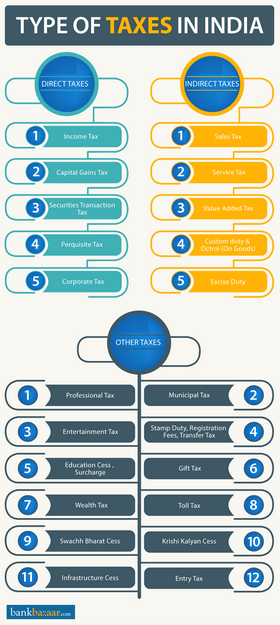
직접세의 예
이는 귀하가 지불하는 직접세 중 일부입니다
가) 소득세:
이는 가장 잘 알려졌지만 이해가 가장 적은 세금 중 하나입니다. 회계연도의 소득에 대해 부과되는 세금입니다. 소득세에는 세금 슬래브, 과세 소득, 원천 공제 세금(TDS), 과세 소득 감소 등과 같은 다양한 측면이 있습니다. 세금은 개인과 회사 모두에 적용됩니다. 개인의 경우 납부해야 하는 세금은 해당 과세 계층에 따라 달라집니다. 이 브래킷 또는 슬래브는 피과세자의 연간 소득을 기준으로 납부할 세금을 결정하며 고소득 그룹에 대한 세금 없음부터 30% 세금까지 범위가 다양합니다.
정부는 일반 납세자, 노인(60세에서 80세 사이의 사람, 초고령자(80세 이상)) 등 다양한 개인 그룹에 대해 서로 다른 세금 슬래브를 정했습니다.
b) 양도소득세:
큰 돈을 받을 때마다 내는 세금입니다. 투자일 수도 있고 부동산 매각일 수도 있습니다. 일반적으로 36개월 미만 보유 투자로 인한 단기 자본 이득과 36개월 이상 보유 투자로 인한 장기 자본 이득의 두 가지 유형이 있습니다. 단기 이득에 대한 세금은 귀하가 속한 소득 계층을 기준으로 계산되고 장기 이득에 대한 세금은 20%이기 때문에 각각에 적용되는 세금도 매우 다릅니다. 이 세금의 흥미로운 점은 이익이 항상 돈의 형태일 필요는 없다는 것입니다. 또한 현물의 교환일 수도 있으며, 이 경우 교환의 가치가 과세 대상으로 간주됩니다.
다) 증권거래세:
주식 시장에서 올바르게 거래하고 증권을 거래하는 방법을 안다면 상당한 돈을 벌 수 있다는 것은 비밀이 아닙니다. 이것도 소득원이지만 증권거래세라는 자체 세금이 있습니다 . 이 세금이 부과되는 방법은 주식 가격에 세금을 추가하는 것입니다. 이는 주식을 사고 팔 때마다 이 세금을 납부한다는 의미입니다. 인도 증권 거래소에서 거래되는 모든 증권에는 이 세금이 부과됩니다.
d) 취득세:
혜택은 고용주가 직원에게 제공할 수 있는 모든 특권 또는 특권입니다. 이러한 특권에는 회사가 제공한 주택이나 회사가 귀하에게 제공한 자동차가 포함될 수 있습니다. 이러한 특혜는 자동차나 주택과 같은 큰 보상에만 국한되지 않고 연료비나 전화 요금에 대한 보상도 포함될 수 있습니다. 이 세금이 부과되는 방법은 회사가 해당 혜택을 취득했거나 직원이 사용한 방법을 파악하는 것입니다. 자동차의 경우, 회사가 제공하고 개인 및 공적 목적으로 사용되는 자동차는 세금을 부과받을 수 있지만 공적 목적으로만 사용되는 자동차는 세금을 부과받을 수 없습니다.
마) 법인세:
법인세는 기업이 벌어들인 수익에서 납부하는 소득세입니다. 이 세금은 또한 회사가 납부해야 하는 세금의 양을 결정하는 자체 슬래브와 함께 제공됩니다. 예를 들어, 매출이 Rs 미만인 국내 회사가 있습니다. 연간 1억 달러는 이 세금을 납부할 필요가 없지만 수익이 Rs 이상인 세금입니다. 연간 1000억 원이 이 세금을 납부해야 합니다. 이는 추가 요금이라고도 하며 수익 등급에 따라 다릅니다. 회사의 수익이 Rs 미만인 경우 법인세가 41.2%가 될 수 있는 국제 회사의 경우에도 다릅니다. 10만 등등.
법인세에는 4가지 종류가 있습니다. 그들은:
· 최소 대체세:
최소 대체세(MAT)는 기본적으로 소득세 부서가 기업이 현재 18.5%에 달하는 최소 세금을 납부하도록 하는 방법입니다. 이 형태의 세금은 소득세법 115JA 조항의 도입을 통해 시행되었습니다. 단, 인프라 및 전력 부문에 종사하는 회사는 MAT 납부가 면제됩니다.
회사가 MAT를 납부하면 특정 조건에 따라 향후 5년 동안 납부해야 하는 일반 세금에 대해 해당 금액을 이월하고 상계(조정)할 수 있습니다.
· 부가 혜택세:
FBT(Fringe Benefit Tax)는 고용주가 직원에게 제공하는 거의 모든 부가 혜택에 적용되는 세금입니다. 이 세금에는 여러 가지 측면이 포함되었습니다. 그들 중 일부는 다음과 같습니다:
i) 여행(LTA), 직원 복지, 숙박 및 접대에 대한 고용주의 비용.
ii) 고용주가 제공하는 정기 통근 또는 통근 관련 비용.
iii) 인증된 퇴직 기금에 대한 고용주의 기여.
iv) 고용주 스톡 옵션 제도(ESOP).
FBT는 2005년 4월 1일부터 인도 정부의 관리 하에 운영을 시작했습니다. 그러나 해당 세금은 이후 2009년 당시 재무부 장관이었던 프라납 무케르지가 2009년 연방 예산안 발표 당시 폐지했습니다.
· 배당금 분배세:
배당금 분배세는 2007년 노동조합 예산 종료 후 도입되었습니다. 기본적으로 기업이 투자자에게 지급하는 배당금을 기준으로 기업에 부과되는 세금입니다. 이 세금은 투자자가 투자로부터 받는 총소득 또는 순이익에 적용됩니다. 현재 DDT 비율은 15%입니다.
· 은행현금거래세:
은행현금거래세는 인도 정부가 포기한 또 다른 형태의 세금입니다. 이러한 형태의 과세는 2005년부터 2009년까지 FM Pranab Mukherjee가 세금을 무효화할 때까지 운영되었습니다. 이 세금은 모든 은행 거래(직불 또는 신용)에 0.1%의 세율이 부과된다는 것을 의미합니다.
2. 간접세:
정의에 따르면, 간접세는 재화나 서비스에 부과되는 세금입니다. 정부에 직접 세금을 납부하는 사람에게 부과되지 않고 제품에 부과되며 제품을 판매하는 중개인이 징수한다는 점에서 직접세와 다릅니다. 간접세의 가장 일반적인 예는 다음과 같습니다 VAT(부가가치세), 수입품에 대한 세금, 판매세 등. 이러한 세금은 제품 가격을 높이는 경향이 있는 서비스나 제품 가격에 세금을 추가하여 부과됩니다.
간접세의 예:
다음은 귀하가 납부하는 일반적인 간접세 중 일부입니다.
ㅏ) 판매세:
이름에서 알 수 있듯이 판매세는 제품을 판매할 때 부과되는 세금입니다. 이 상품은 인도에서 생산되었거나 수입된 상품일 수 있으며 제공된 서비스에도 적용될 수 있습니다. 이 세금은 제품 판매자에게 부과되며, 판매자는 제품 가격에 판매세를 추가하여 해당 제품을 구매하는 사람에게 이전합니다. 이 세금의 한계는 특정 제품에 대해서만 부과할 수 있다는 것입니다. 즉, 해당 제품이 두 번째 판매되는 경우에는 판매세가 적용될 수 없습니다.
기본적으로 미국의 모든 주에서는 자체 판매세법을 따르고 자체적으로 일정 비율을 부과합니다. 이 외에도 일부 주에서는 매출세, 구매세, 작품 거래세 등과 같은 기타 추가 비용을 부과합니다. 이는 또한 판매세가 다양한 주 정부의 가장 큰 수입원 중 하나인 이유이기도 합니다. 또한 이 세금은 중앙 및 주 법률에 따라 부과됩니다.
비) 서비스세:
인도에서 판매되는 상품 가격에 판매세가 추가되는 것처럼 인도에서 제공되는 서비스에도 서비스세가 추가됩니다. 2015년 예산안에서는 서비스세가 12.36%에서 14%로 인상된다고 발표되었습니다. 재화에 대해서는 적용되지 않고, 서비스를 제공하는 회사에 대하여는 적용되며, 서비스 제공 방식에 따라 월 1회 또는 분기 1회 수집됩니다. 시설이 개인 서비스 제공업체인 경우 서비스세는 고객이 청구서를 지불한 후에만 납부됩니다. 그러나 회사의 경우 고객이 청구서를 지불하는지에 관계없이 청구서가 발행되는 순간 서비스세가 납부됩니다.
기억해야 할 중요한 점은 레스토랑에서의 서비스는 음식, 웨이터 및 시설 자체의 조합이기 때문에 무엇이 서비스세 대상인지 정확히 파악하기 어렵다는 것입니다. 이와 관련하여 모호함을 없애기 위해 레스토랑 서비스세는 총 청구 금액의 40%에 대해서만 부과된다고 발표되었습니다.
- GST - 상품 및 서비스세:
상품 및 서비스세(GST)는 약 25년 전 시장이 개방되기 시작한 이후 인도 간접세 구조에서 가장 큰 개혁입니다. GST는 소비가 이루어지는 곳에 적용되는 소비 기반 세금입니다. GST는 공급망의 각 소비 단계에서 부가가치 상품 및 서비스에 부과됩니다. 상품 및 서비스 조달에 대해 지불해야 하는 GST는 상품 및 서비스 공급에 대해 지불해야 하는 GST와 상계될 수 있으며, 판매자는 해당 GST 요율을 지불하지만 세금 공제 메커니즘을 통해 이를 다시 청구할 수 있습니다.
씨) 부가가치세:
상업세라고도 알려진 VAT는 세율이 0인 상품(예:. 식품 및 필수의약품) 또는 수출에 해당하는 것. 이 세금은 제조업체, 딜러, 유통업체부터 최종 사용자에 이르기까지 공급망의 모든 단계에서 부과됩니다.
부가가치세는 주 정부의 재량에 따라 부과되는 세금으로 처음 발표되었을 때 모든 주에서 이를 시행하지는 않았습니다. 세금은 주에서 판매되는 다양한 상품에 부과되며, 세금의 액수는 주에서 자체적으로 결정합니다. 예를 들어 구즈라트(Gujrat)에서는 정부가 모든 상품을 일정이라는 다양한 범주로 나눴습니다. 3가지 일정이 있으며 각 일정에는 고유한 VAT 비율이 있습니다. 스케줄 3의 경우 VAT는 1%이고, 스케줄 2의 경우 VAT는 5%입니다. 어떤 카테고리로도 분류되지 않은 상품에는 15%의 VAT가 부과됩니다.
디) 관세 및 Octroi:
다른 나라에서 수입해야 하는 물건을 구입하면 그에 따른 수수료가 부과되는데, 이것이 바로 관세입니다. 육상, 해상, 항공을 통해 들어오는 모든 제품에 적용됩니다. 다른 나라에서 구매한 제품을 인도로 반입하는 경우에도 관세가 부과될 수 있습니다. 관세의 목적은 국가로 들어오는 모든 물품에 대해 세금을 부과하고 비용을 지불하는 것입니다. 관세가 다른 국가의 상품에 세금을 부과하는 것처럼 octroi는 인도 내 주 경계를 통과하는 상품에 적절한 세금이 부과되도록 보장합니다. 이는 주 정부에 의해 부과되며 관세와 거의 동일한 방식으로 기능합니다.
이자형) 소비세:
이는 인도에서 제조 또는 생산된 모든 상품에 부과되는 세금입니다. 인도에서 생산된 물건에만 적용된다는 점에서 관세와는 다르며 중앙부가가치세(CENVAT)라고도 알려져 있습니다. 이 세금은 정부가 상품 제조업체로부터 징수합니다. 또한 제조된 제품을 수령하고 제품을 제조업체에서 자체적으로 운송하기 위해 인력을 고용하는 기업으로부터 수집할 수도 있습니다.
중앙정부가 정한 중앙소비세 규칙은 '소세 대상 상품'을 생산 또는 제조하거나 그러한 상품을 창고에 보관하는 모든 사람이 해당 상품에 적용되는 관세를 지불해야 한다고 제안합니다. 이 규칙에 따라 관세를 납부해야 하는 소비세 대상 물품은 해당 물품이 생산되거나 제조되는 어느 곳에서든 관세를 납부하지 않고 이동할 수 없습니다.